Why the UTI Advice You Were Given Never Worked for You — and What Actually Changed in Your Body After 45
A 53-year-old who never had a single UTI until menopause spent two years on cranberry, $90 "systems," and endless antibiotics — until one late-night search explained what no appointment ever had.
It was 11:04 at night when I finally typed it.
The house was quiet. I was sitting on the edge of my bed with my phone turned low so the light wouldn't wake my husband, typing a question I was almost embarrassed to ask out loud:
why am I getting UTIs all of a sudden in my fifties
I'm 53. Until about four years ago, I had never had a urinary tract infection in my life. Not one. Then, somewhere around 49, they started — and my life quietly began reorganizing itself around something I couldn't name.
Maybe you'll recognize some of this. I suspect you will.
I knew where every bathroom was on every route I drove — the good one at the grocery store, the one at the bank I'd rather not use. At restaurants I took the seat near the hallway. The dread of that first hot twinge follows you around like a shadow, and after a while you stop noticing you've built your whole day around it.
I knew the loop by heart: a flare, a prescription, a few good weeks, and then the music starts again. The antibiotic merry-go-round — round and round, never actually getting off. More antibiotics in two years than in the rest of my life combined — including the Sunday a flare hit hard enough that I ended up in urgent care, and still walked out with the same printout and the same non-answer.
I knew the shelf. Cranberry pills until my cupboard rattled. D-mannose. The expensive three-product "systems" — I later found a thread of women adding one up to almost ninety dollars, one of them calling it, bluntly, a rip-off.
I knew the days when the burning was the first thing I felt in the morning and the last thing I felt at night. There's a line in a notebook from that spring I can barely stand to reread:
"like passing broken glass."
And I knew what it was costing. I had started living a smaller life. The trip I didn't book because I couldn't face four hours of highway between rest stops. The sleep I didn't get. The side of the bed that slowly became just mine. My husband stopped asking if I was okay — not because he stopped caring, but because he'd run out of ways to ask.
I asked my doctor, of course — and I like my doctor. But I got a shrug and a refill. At one appointment I was more or less told I was worrying too much. At another, that it was probably just an overactive bladder — and I left with a different pill for a different problem. Once, the test came back negative while my body was screaming otherwise, and I sat in the parking lot holding that piece of paper, genuinely wondering if I was losing my mind.
Nobody once said the word menopause. So I settled on the quietest, cruelest explanation available: maybe my body had just… turned on me.
You are not rare. And you were never imagining it.
Urinary tract infections hit hundreds of millions of people worldwide every single year. More than half of all women will have at least one — and after menopause, the recurring kind climbs sharply. This is one of the most common health stories among women our age, which makes the silence around its actual cause the part that should make you angry. It made me furious — because what I found at 11 p.m., alone, on my phone, had been sitting in the medical literature the whole time.
What I found were three things nobody had told me.
The standard test has a documented blind spot. The threshold most labs still use to call a urine culture "positive" traces back to research from the 1950s. Researchers have since documented that a meaningful number of women with genuine symptoms get "negative" results under that old cutoff. A normal result on an old threshold is not the same as nothing being wrong — and "could we look beyond the standard culture?" is a legitimate question to bring to your doctor. You were never crazy. Your body was allowed to be the one telling the truth.
Recurrence has a hiding place. Researchers who study why these infections keep coming back describe bacterial communities that shelter, persist, and resist — one reason "just take another round" can feel like bailing a boat without finding the leak. But the real question isn't how it hides. It's why the ground became hospitable in the first place.
The ground itself changed. Estrogen doesn't just govern hot flashes and mood. It's part of what keeps the lining of your urinary tract thick, resilient, and protected — and part of what maintains the environment and the protective bacteria that keep things in balance. When estrogen drops through perimenopause and after, that lining thins. The chemistry changes. The protection fades. Tissue that was robust for your entire adult life becomes vulnerable — which is exactly why women who never once had a UTI can suddenly start getting them, over and over, in their late 40s and 50s.

Think of it like a garden losing its topsoil. For decades, rich topsoil kept the ground protected and everything in balance. Then, at menopause, the topsoil starts washing away — and ground that used to resist suddenly can't. Nothing is wrong with the gardener. The conditions changed.
It's the estrogen shift.
In 2025, the major urology associations — the AUA, the Canadian Urological Association, and the Society of Urodynamics — updated their guidance: for peri- and postmenopausal women with recurrent UTIs, the first-line approach is low-dose vaginal estrogen, prescribed by a doctor. The first thing they now tell clinicians to raise.
And here's the part that made me want to throw the phone: this is not fringe. One prominent menopause specialist put it almost exactly the way I'd lived it — most women don't know these UTIs are linked to menopause, and neither do many of their doctors. It rarely fits in a twelve-minute appointment. So women find out the way I did: alone, late, from a screen.
Two things hit me at once — and I want you to have both.
The first was relief so sharp it brought tears: it wasn't me. I wasn't broken. My body had changed in a specific, explainable, extremely common way — and I simply hadn't been told.
The second was colder: the advice I'd been following was never built for me. Cranberry, D-mannose, "pee after sex" — that's the playbook for the young, sex-associated UTI, aimed at women in their twenties. A product formulated around a 25-year-old's problem was never designed for a 52-year-old's biology. I wasn't failing those products. They were built for a different woman.
So here's exactly what I did that night — and the order matters.
I ordered the bottle. Then, the next morning, I booked the appointment.
The routine started the day the box arrived. The conversation with my doctor happened twelve days later — and I walked in carrying the label and one written question: "Could the estrogen shift be part of my picture, and is low-dose vaginal estrogen right for me?" It was the best appointment I'd had in two years, because for the first time I wasn't asking her to guess. She said the word. We made a plan. And the daily layer was already on my counter, doing its job alongside everything we decided.
Do both. But know the difference: the appointment takes a phone call and a couple of weeks on the calendar. The bottle takes one click and it's on your counter in days. Start with the one you can start tonight — that's what I did.
What the daily layer actually is.
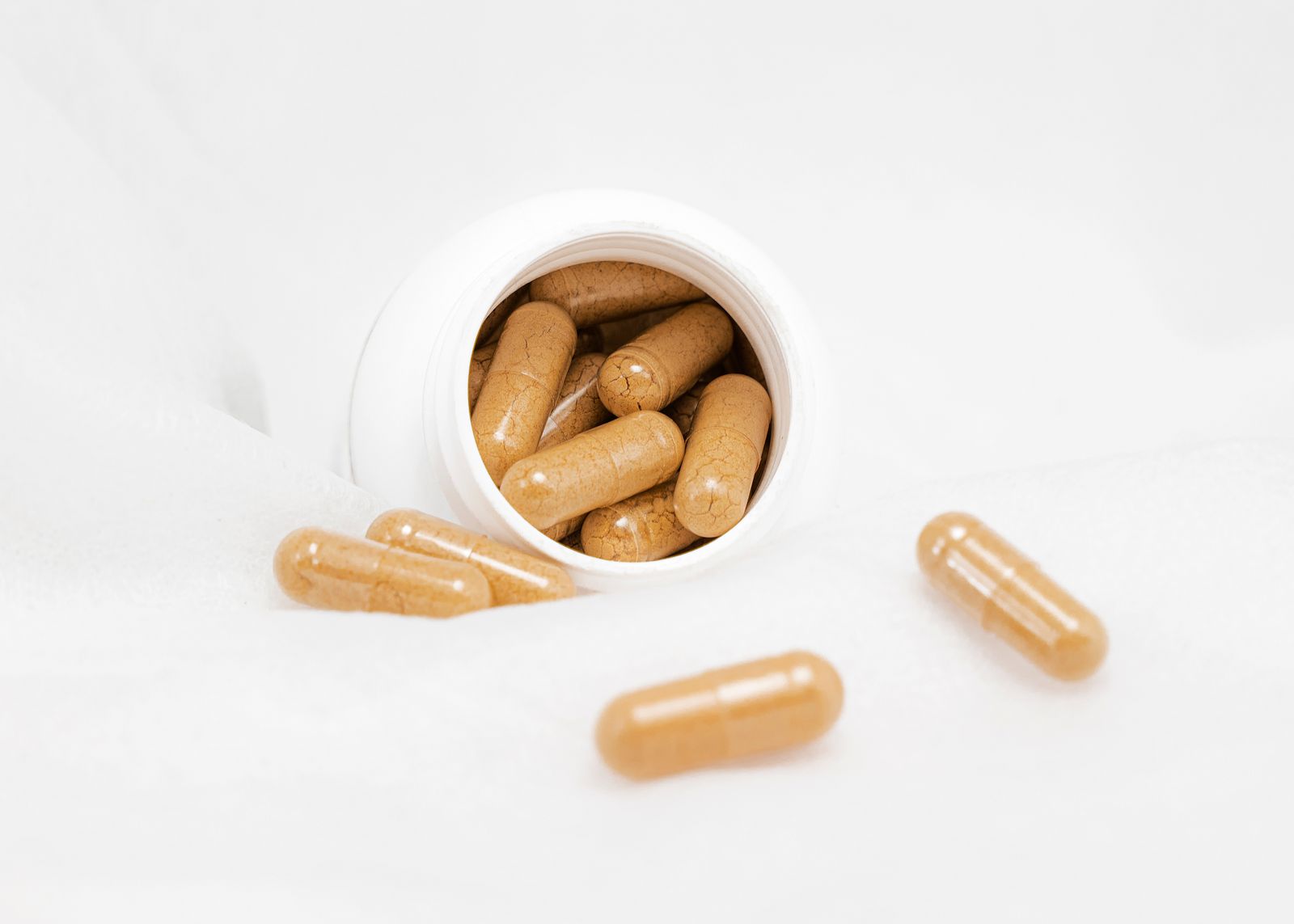
Navea Flow is a once-a-day routine built specifically for women in the estrogen shift — two small capsules with your morning coffee, designed to support urinary-tract health through the change of life.* Done before the coffee finishes brewing.
And because after two years of mystery blends the label was the first thing I checked: everything in it is printed at its full amount. Birch-derived D-mannose — corn-free, with the sourcing paperwork behind it. Vitamin D, because the change-of-life years are exactly when so many of us run low. Turmeric extract and green tea polyphenols rounding out a formula chosen for this stage of life — no proprietary blends, no padding, nothing you can't see and check.

About that birch part — the standard the rest of the aisle won't meet.
While I was checking labels, I learned something the aisle doesn't photograph: the overwhelming majority of D-mannose sold in this country is fermented from GMO corn in industrial plants overseas — cheap by the kilo, everywhere, hiding behind labels that tell you none of it. Navea went the other way: birch-derived, corn-free, documented — and they'll show you the paperwork. Nobody's claiming a tree performs miracles. It's simpler than that: this is a company that decided you were owed the truth about what goes in your body, priced it fairly anyway, and put every milligram on the label. After the aisle I'd been shopping, that standard was the whole point.

One promise you won't find on this page.
You've read the pages that promise prevention. "Never get another one." The day-by-day countdowns. Some of you got here from a page like that. So once, plainly: any supplement page that promises to prevent or cure your UTIs is lying to you — and some part of you already knew it, which is exactly why you're skeptical. This page won't do that to you. Instead of a promise nobody can keep, Navea hands you the only guarantee that means anything: sixty days on your counter, judged by you, money back if it doesn't earn its place. The hype pages make you promises. The honest one lets you verify.
What women tell us, in their own words.
"I read the explanation and cried. Two years of thinking I was doing something wrong — gone in one page."
"I walked into my appointment with the label and the question written down. My doctor's whole posture changed. Best conversation we've ever had."
"Two capsules next to the coffee maker. It's the one part of this whole thing that's ever been easy."
Individual experiences with a daily routine — not claims about results.
What actually changed for me.
Not a medical claim — my Tuesdays. I haven't typed an 11:04 search in months, because I have the answer. I don't rehearse explanations in waiting rooms anymore, because my doctor and I are finally working the same problem. The dread doesn't run my mind the way it used to — dread feeds on confusion, and I'm not confused anymore. And every morning there are two capsules next to the coffee maker that say the same thing back to me: you're handling this. That's what $29.98 actually bought. It was the cheapest part of the entire two years.

The math the aisle hopes you won't do.
The three-product "systems" run near ninety dollars. The merry-go-round costs a copay times however many rides — plus the trips you don't book and the sleep you don't get. Navea Flow is $29.98 when you start today. About a dollar a day. (Full price is $44.00 — your call.)
And the risk is entirely ours: a 60-day money-back guarantee — two full months on your counter, and if you decide it hasn't earned its spot next to the coffee maker, you get your money back and you keep everything you learned on this page. Keep the routine if it sticks; cancel-anytime means two clicks, no phone call, no guilt trip. That trade only loses if you never take it.

Navea Flow
Daily support for urinary-tract health through the change of life.* Two capsules each morning. Every ingredient at its full amount.
*These statements have not been evaluated by the Food and Drug Administration. This product is not intended to diagnose, treat, cure, or prevent any disease.
Start the Daily Layer60-day money-back guarantee · Ships in days
Supplement Facts — read the full label
Every ingredient, every amount — see the complete label on the product page →
Two roads from this page.
One: close it, and keep doing what the last two years looked like — the map, the loop, the shelf, the 11:04 searches. You already know where that road goes, because you've been on it.
Two: order the bottle tonight, book the appointment tomorrow, and walk into it the way I finally did — with the label in your hand, the question written down, and the routine already started.
Most women read a page like this twice — once tonight, and once after the next flare, at 11:04, with the light turned low. You don't need the second read. You have the explanation. You have the question. The rest is one click and two months to decide.
Start Tonight — Two Months to Decide →$29.98 to start · 60-day money-back guarantee · cancel anytime
— Madison Fleming · a 53-year-old who wishes someone had told her sooner. You've waited long enough.
Questions women actually ask
How is this different from everything I already tried?
Everything on that shelf was built around a younger woman's cause. Navea Flow was built for yours — the estrogen-shift stage — with every ingredient chosen for this season of life and printed at its full amount. Different woman, different formula, and a label that proves it.
I'm already on vaginal estrogen. Does this still fit?
Perfectly — that's the foundation, and Navea is the daily layer designed to sit alongside it. That's exactly the "alongside" on our label.
What's actually in it?
Birch-derived D-mannose — corn-free, with the sourcing documented. Vitamin D. Turmeric extract and green tea polyphenols. Every one printed at its full amount, no proprietary blends. Open the Supplement Facts above and read it to the bottom.
Should I stop trusting the urine test?
No — bring the question, not the distrust. "Could we look beyond the standard culture?" is a fair, documented thing to ask, and your doctor is your partner in it.
Will this prevent my UTIs?
No supplement can honestly promise you that — and the ones that do are the reason you stopped trusting this aisle. Navea Flow supports urinary-tract health through the change of life,* alongside your doctor's care — and if you have symptoms right now, call your doctor today. For everything else: sixty days, and our money where our mouth is.
What if it's not for me?
Sixty days, money back, two clicks to cancel. Two full months to decide — and the knowledge on this page is yours to keep either way.